
 EN
EN



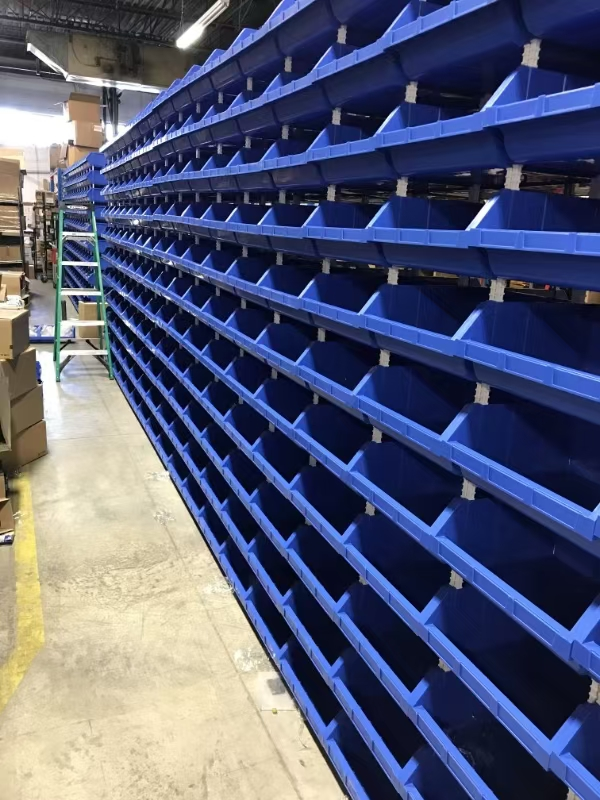
Why Warehouse Storage Bins Are the Foundation of Space and Flow Optimization
The cubic utilization gap: How misaligned bin selection wastes up to 35% of vertical space
When warehouses use storage bins that are too small or can't stack properly, they end up wasting all that space above the goods sitting there unused. Studies indicate that companies actually waste around 35% of their total storage volume when these bins don't match up with what's being stored or how the racks are set up. And this isn't just about wasted space either. These kinds of problems lead to slower restocking times, higher costs for every square foot of warehouse floor, and workers having to walk longer distances between items during picking operations. Some managers have even told me that fixing these storage issues alone can save them thousands each month.
Optimize vertical density by matching bin height to SKU stack height and rack clearances—especially critical in high-cost warehouse environments.
Modularity matters: How standardized warehouse storage bins enable scalable, data-driven layout planning
Uniform bin systems transform chaotic storage into predictable, matrix-based workflows. Standardized dimensions support dynamic slotting based on turnover analytics, seamless integration with WMS location logic, and rapid reconfiguration during seasonal shifts.
Implementing modular bins cuts restructure costs by 40% versus custom solutions while enabling real-time inventory cube utilization tracking, predictive space modeling for new SKUs, and ergonomic stacking profiles for safer operations. Facilities using standardized bins report 22% faster cycle counts (Warehousing Efficiency Report 2024).
Matching Bin Types to SKU Velocity Using ABC Analysis
Prioritizing placement: Assigning high-turnover SKUs to ergonomic, stackable warehouse storage bins
The ABC method sorts inventory based on how often items are picked. Typically, around 20% of stock keeping units account for roughly 80% of all picking activity, so these top performers need special attention. Place such high turnover goods in ergonomically designed, stackable containers right next to where orders get packed. Warehouse workers save considerable time when they don't have to walk far between picking locations. Some studies suggest this can cut down travel time by maybe 30 something percent compared to putting things way back in storage. Stackable systems work well because they maximize space upwards without making it hard to grab what's needed quickly. When choosing bins, look for ones with sloped sides that make pulling out items easier, plus strong corners since these containers will be handled repeatedly throughout the day.
Right-sizing by class: Bin dimensions and stacking profiles for A-, B-, and C-class items
Align bin specifications with SKU velocity profiles:
- A-items: Use shallow bins 12" deep (e.g., 12"L × 8"W × 6"H) with interlocking stackability. Limits overhandling and accelerates restocking.
- B-items: Mid-depth bins (14–18" deep) with nesting capability. Balance storage density with weekly access needs.
- C-items: Deep containers (20–24"+ depth) with high stackability. Maximizes cube utilization for low-velocity goods accessed monthly.
Slow-movers benefit from taller stacking heights (5+ tiers), whereas A-items typically cap at 3–4 tiers for safety and speed. Nesting bins recover 40–60% floor space when empty versus rigid designs.
Strategic Bin Placement, Labeling, and Zoning for Accuracy and Speed
Zone-aligned labeling systems (e.g., 'Z3-BIN-087A') to eliminate mispicks and accelerate location recall
When warehouses stick to consistent labeling systems, they see around a 15 to 25 percent drop in picking mistakes and about 30% faster recall times for locations. The best practice is setting up hierarchical codes following a pattern like Zone-Aisle-Bin format (think Z3-BIN-087A). Basically, the first part tells us which zone we're looking at, the middle numbers point out specific aisles, and whatever comes after gives the exact spot within that bin area. For maximum effectiveness, put labels at two different heights. Floor workers need them closer to knee level so they can easily spot them when walking through, whereas equipment operators will appreciate seeing labels right at eye level as they drive around. This kind of organized system keeps things from getting misplaced because it helps everyone remember where stuff goes naturally over time without having to constantly refer back to maps or notes.
Visual management integration: Color-coding and QR-tagged warehouse storage bins for real-time reconciliation
When products are sorted into color coded bins—red for those expensive goods and blue for the ones that fly off the shelves—staff can quickly spot what's where during stock checks. Combine these colored containers with QR codes connected to warehouse management systems and things get even better. Scanning items as they go onto shelves confirms their placement right away. The system also sends warnings if something ends up in the wrong spot and automatically tracks inventory cycles without needing any paper records. What we're seeing is that this combination of colors and technology brings together what's actually on the floor with what shows up on screens, cutting down the time needed to match them up by about 40%. Warehouse workers tell us they make roughly 30% fewer mistakes picking items when they have both colors and digital info guiding them through the process.
Selecting High-Performance Warehouse Storage Bins for Vertical Density and Operational Resilience
Stackable, nestable, and returnable bin types—comparing durability, footprint recovery, and TCO
Getting the most out of warehouse storage really comes down to picking the right kind of bins for different situations. Stackable bins are tough as nails and can handle stacking vertically without breaking, which means warehouses can save around 30% on floor space just by making better use of vertical space. Then there's the nestable option that takes up way less room when not in use, saving somewhere between 60 to 70% of storage space when they're empty. These ones aren't quite as durable though since they need to be lighter for easier moving around. Returnable bins might cost more upfront but pay off in the long run because they last so much longer. Companies report about 40% savings over five years when they reuse these bins instead of constantly buying new ones. Looking at industry data, businesses that deal with fast moving goods tend to get the best bang for their buck with returnable systems, while nestable bins work great when inventory levels drop off during slow seasons. For permanent storage where space matters most, go with stackable. Need flexibility? Nestables fit the bill. And if the operation runs on a tight loop with constant product movement, returnable bins will keep things running smoothly without breaking the bank eventually.
FAQs
Why is bin selection critical for warehouse operations?
Proper bin selection is crucial for optimizing warehouse storage space, enhancing operational efficiency, and reducing costs. Incorrect bin choices can lead to wasted space, increased restocking times, and inefficient operations.
What are modular warehouse storage bins?
Modular warehouse storage bins have standardized dimensions and are designed to be rearranged and integrated with warehouse management systems (WMS) for dynamic and efficient storage solutions.
How does ABC analysis help in bin placement?
ABC analysis categorizes inventory based on turnover rates, allowing high-turnover SKUs to be placed in ergonomic, stackable bins for quicker and easier access, reducing picking times.
What labeling system is recommended for warehouses?
A zone-aisle-bin code system is recommended, as it enhances accuracy and speed in locating and recalling storage areas, reducing picking errors.
What are the advantages of using color-coded bins in warehouses?
Color-coded bins help easily identify product types, prevent picking errors, and, when combined with QR codes, streamline real-time inventory management and reconciliation.
Table of Contents
- Why Warehouse Storage Bins Are the Foundation of Space and Flow Optimization
- Matching Bin Types to SKU Velocity Using ABC Analysis
- Strategic Bin Placement, Labeling, and Zoning for Accuracy and Speed
- Selecting High-Performance Warehouse Storage Bins for Vertical Density and Operational Resilience
- FAQs

