
 EN
EN



Align Bin Specifications with Inventory Characteristics
Item size, weight, and fragility: guiding structural design and capacity requirements for warehouse storage bins
When choosing storage bins, it's important they match what kind of stuff we're actually putting inside. For anything really heavy, say over 15 kilograms, the base needs reinforcement and those sides should definitely be tested for load capacity. The Logistics Quarterly reported last year that about one in four warehouse accidents could have been prevented if better containers had been used. Glass vials and other delicate items need some padding between them and walls made to withstand impacts. Odd shaped products work best when there are partitions inside that can move around as needed. Planning how much goes into each bin isn't just about space though. If something gets too heavy for the container, it won't last nearly as long. Stress tests show overloaded bins typically only make it through about 60% of their expected lifespan before breaking down completely.
Matching bin type to SKU profile: fast-moving, hazardous, temperature-sensitive, and high-value goods
Different types of products need different storage solutions. For fast moving items, front facing bins with tilt mechanisms work really well, and warehouses report picking speeds go up around 30% when these are used. When dealing with dangerous stuff, companies must use containers certified by the UN standards that can contain spills, particularly important for chemicals that ignite easily under 60 degrees Celsius. Pharmaceuticals that need temperature control absolutely need insulated bins keeping them between 2 and 8 degrees Celsius throughout shipping. Electronics worth a lot of money benefit from containers that show if someone has tampered with them plus RFID tracking features. Some tests showed this setup cut down on lost inventory by about 17%. Color coded labels and other visual markers make it easier for workers to handle all these special cases without confusion.
Maximize Space Efficiency with Stackable and Nestable Warehouse Storage Bins
Vertical stacking vs. horizontal nesting: impact on racking compatibility and floor footprint
When companies stack bins vertically, they basically take advantage of all that unused space above the ground level. Just pile them on top of each other and integrate these stacks right into existing pallet rack systems. This cuts down significantly on how much floor space gets eaten up. But there's a catch. The bins need special features like interlocking edges or stronger bottom supports so they don't slide around when heavy items are stored inside. For horizontal nesting, think about those empty bins collapsing inward like Russian dolls. Works great for returning goods or storing stuff seasonally. We've seen warehouses save between 60 to 70 percent of their storage volume this way. Stacked arrangements work best in facilities where product quantities stay pretty steady and the racking system is solid enough to handle the weight. On the flip side, nested bins shine in situations where inventory levels go up and down constantly and every square inch counts. Sure, stacking recovers about 30 to 40 percent of floor space, but those metal racks standing upright usually block access to the very top areas. And while nestable bins offer incredible efficiency when not loaded, most traditional racking systems won't support them once filled because of potential stability issues.
Calculating true cube utilization—how nestability and collapsed storage reduce long-term operational costs
True cube utilization measures volumetric efficiency across the entire operational lifecycle—including storage, transport, and return cycles. Nestability slashes empty-bin storage needs to just 25–35% of expanded volume, directly lowering square footage costs. Collapsible designs offer comparable space savings but introduce reassembly labor. Key cost implications include:
| Factor | Stackable Bins Impact | Nestable Bins Impact |
|---|---|---|
| Storage Density | Optimizes vertical rack space | Maximizes collapsed storage |
| Return Transport | Requires full-volume shipping | Enables 65% fewer shipments |
| Lifetime Space Cost | $18–$22/sq ft annually | $6–$10/sq ft annually |
Facilities deploying strategic nesting report 19% lower storage expenses and 28% reduced transport fees over five-year periods. ROI accelerates further when factoring in lower damage rates tied to proper nesting—eliminating compression-related product loss during transit and storage.
Select Durable, Sanitary, and Environmentally Resilient Materials
Plastic, corrugated cardboard, and wire mesh compared: durability, moisture resistance, cleanability, and lifespan in warehouse storage bins
What materials get chosen for storage solutions makes a huge difference in how well they work day to day and what kind of money gets spent over time. Take industrial plastic bins made from HDPE as an example. These things can take serious punishment, surviving hundreds of loading cycles and keeping their shape even when temperatures swing between -20 degrees and 180 degrees Fahrenheit. The surface doesn't absorb water either, so cleaning them thoroughly with strong industrial products isn't a problem. Most last around 8 to 12 years before needing replacement. Compare that to corrugated cardboard boxes which fall apart quickly when exposed to any moisture at all. After just a little dampness, these lose about 60% of their strength and are usually gone within 3 to 6 months. Wire mesh containers aren't much better. Regular ones start rusting after about 18 months sitting in normal warehouse conditions, and even the coated versions tend to collect dirt and grime that's tough to clean properly. For most industrial operations facing tough conditions, HDPE bins strike just the right balance between resisting chemicals, staying clean, and lasting long enough to justify the initial investment.
Material performance comparison:
| Attribute | Plastic | Corrugated Cardboard | Wire Mesh |
|---|---|---|---|
| Moisture Resistance | Excellent | Poor | Moderate |
| Cleanability | High (non-porous) | Low (absorbs spills) | Medium (trap debris) |
| Lifespan | 8–12 years | 3–6 months | 2–5 years |
| Relative Durability | 5× longer than alternatives | Least durable | Moderate (prone to denting) |
The initial 30% cost premium for HDPE bins yields a 70% reduction in replacement costs over ten years versus disposable alternatives—making durability a decisive economic factor, not just an operational convenience.
Prioritize Security, Visibility, and Operational Flexibility
Enhancing loss prevention and traceability via transparent designs, integrated label holders, and color-coded warehouse storage bins
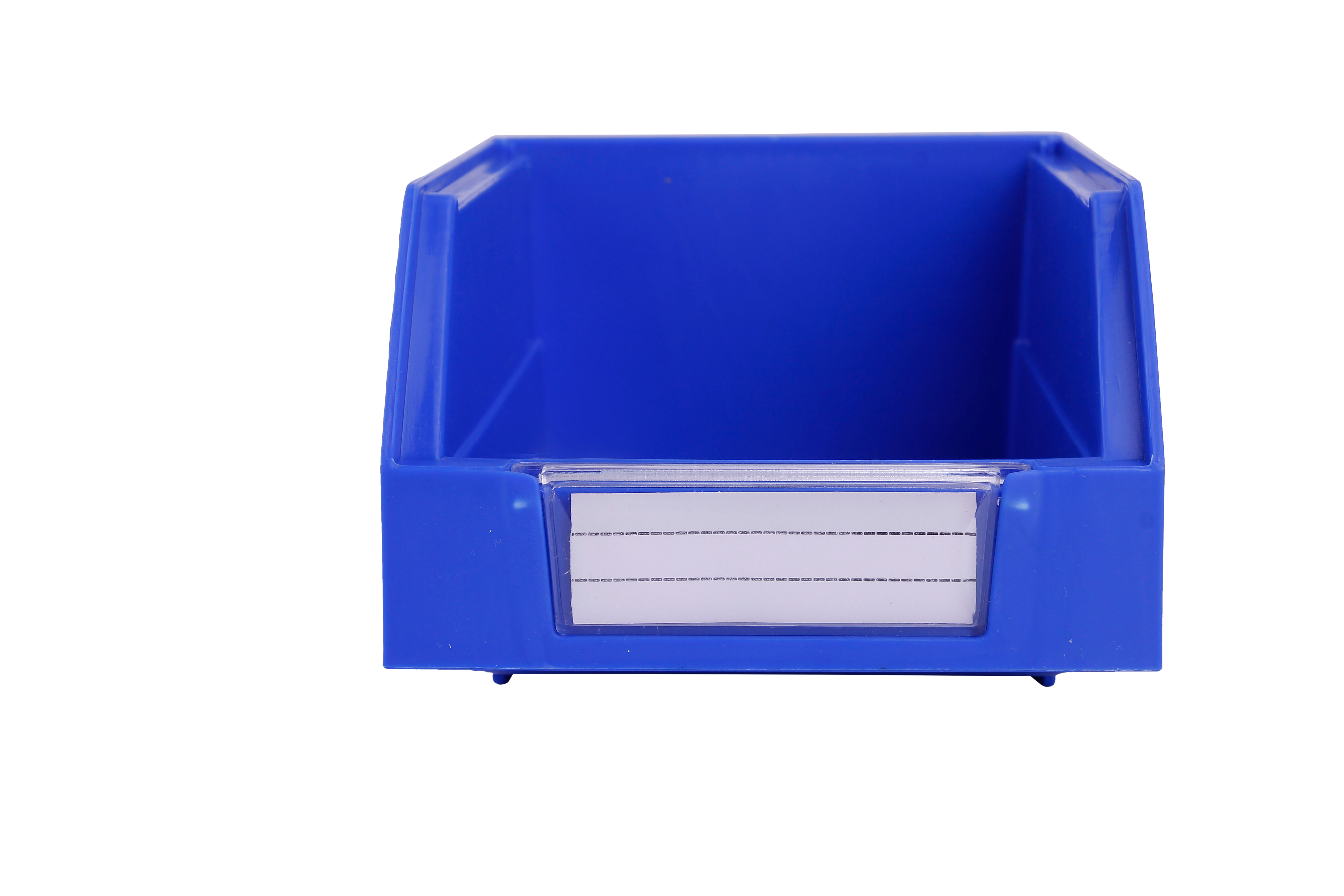
Clear plastic storage containers let workers see what's inside without having to open them up first, which cuts down on mistakes when handling goods and reduces shrinkage losses by around 18%, according to warehouse efficiency studies. The built-in label slots hold those barcodes and QR codes right where they need to be for scanning, so there's no confusion about tracking items from when they arrive until they leave the facility. When warehouses use color coding schemes, assigning different colors to various product types, urgency levels, or compliance requirements, this approach slashes picking errors by approximately 27% while making inventory checks go much faster. All these practical features work together to build workflows that can be audited easily and resist tampering, helping protect against losses throughout all stages of operations.
Ergonomic handling, forklift/pallet jack compatibility, and rapid deployment across changing warehouse workflows
Handles that are shaped to fit the hand comfortably along with proper weight balance help reduce back and muscle strain when people need to move things manually. These designs follow what OSHA recommends for lifting tasks that happen repeatedly throughout the day. The containers also come with special fork lift channels and strong bases so they can be moved directly using pallet jacks or forklifts without having to unload and reload them first, which saves both time and money on labor costs. Standardized bin sizes make it easy to rearrange storage areas quickly. When not in use, these bins can fold down to take up just 40% of their normal space. Plus, since all the bins have the same base size, they work well together no matter how the warehouse layout changes over time whether dealing with busy seasons or expanding operations. All this means companies can redeploy their storage solutions much faster than before cutting down on wasted hours by around two thirds. And in today's fast moving business world, being able to adapt quickly is worth its weight in gold for most manufacturers.
FAQ
Q: What are the main factors to consider when choosing warehouse storage bins?
A: Key factors include item size, weight, fragility, SKU profile (such as fast-moving or hazardous), and temperature sensitivity. Understanding these elements helps align bin specifications with inventory characteristics.
Q: How do stackable and nestable bins impact space efficiency?
A: Stackable bins optimize vertical rack space, while nestable bins maximize collapsed storage. Both designs aid in significant floor space recovery but require specific compatibility considerations.
Q: Why is material choice important for warehouse storage bins?
A: Material choice affects durability, moisture resistance, cleanability, and lifespan. For instance, HDPE plastic bins excel in durability and moisture resistance, proving cost-effective over time compared to options like corrugated cardboard and wire mesh.
Q: What role does color-coding play in warehouse operations?
A: Color-coding aids in quick identification and handling of products, reducing errors and ensuring compliance. It enhances operational efficiency by streamlining picking and inventory checks.
Q: How can ergonomic designs benefit warehouse workers?
A: Ergonomically designed handles and balanced weight distribution reduce strain during manual handling, aligning with OSHA recommendations and improving worker comfort and productivity.

