
 EN
EN



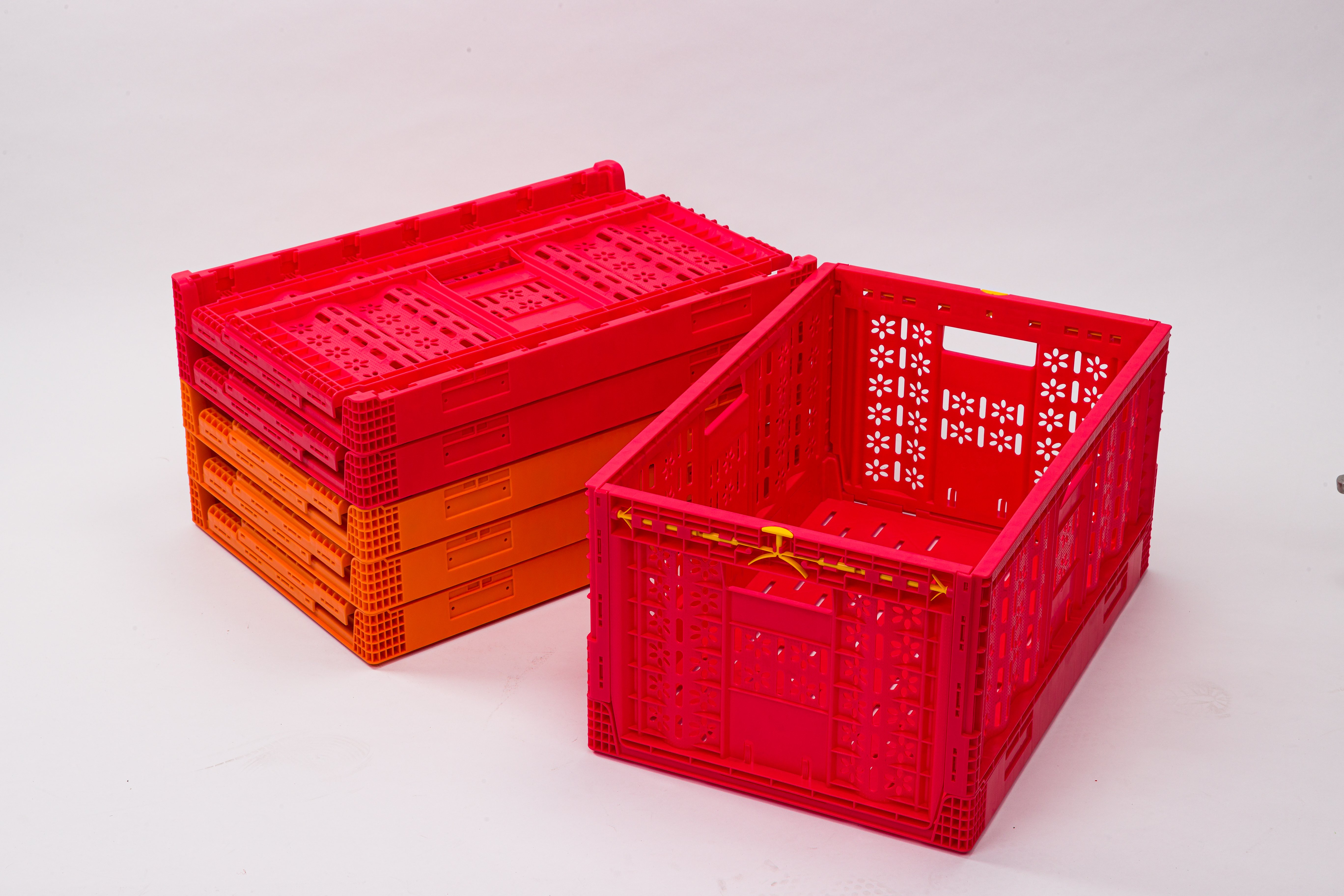
Structural Suitability of Plastic Folding Crates for Travel
Load Capacity, Impact Resistance, and Airline Baggage Handling Standards
Travel plastic folding crates need to keep stuff safe even when tossed around rough during transport. The better quality ones can handle between 50 to 75 pounds which fits right inside what airlines allow for checked bags. They usually come with reinforced corners and those ridged bottoms that stop them from collapsing when stacked up high. Airlines actually test these crates by dropping them from heights of about 4 to 6 feet to mimic how they get handled on conveyors and loaded onto planes. These containers are built tough enough to take stacking weights over 300 pounds mid-flight too. The thick polymer walls plus those clever interlocking parts help everything stay intact throughout the journey. And when folded down (which cuts their thickness by roughly 20 to 30 percent), they still hold their shape without getting bent out of form or causing problems on those automatic bagging machines at airports.
Material Science: HDPE vs. PP in Travel-Grade Plastic Folding Crates
Travel crates rely primarily on HDPE (High-Density Polyethylene) or PP (Polypropylene), each optimized for distinct operational demands:
| Property | HDPE | PP |
|---|---|---|
| Impact Resistance | Excellent at low temps | Moderate |
| Weight Capacity | Higher rigidity | Flexible under load |
| Folding Endurance | 5,000+ cycles | 10,000+ cycles |
| Temperature Range | -40°F to 150°F | 0°F to 200°F |
| Moisture Barrier | Superior protection | Good resistance |
High Density Polyethylene (HDPE) works really well at absorbing shocks in those chilly cargo areas, making it great for transporting delicate stuff or things worth a lot of money. Polypropylene (PP), on the other hand, stands up much better to being folded over and over again without breaking down. These materials both hold their shape pretty well even when temperatures swing around during flights. Some newer blends mix these polymers together to get the best of both worlds, giving about an 80% shrinkage when packed away flat. Most people traveling with fragile items should probably go with HDPE if protecting against impacts matters most. But folks who need something that can be folded many times without wearing out might find PP more suitable for their needs.
Space Efficiency and Portability of Plastic Folding Crates
Volume Reduction Metrics: Collapsed vs. Expanded Dimensions (EuroPlast Benchmark Data)
The space saving benefits of plastic folding crates are pretty impressive. According to EuroPlast's 2023 benchmarks, these crates can save anywhere between 70 to 85 percent of their space when folded down. Take a regular 60 liter crate as an example it goes from those big dimensions of 60 by 40 by 30 centimeters all the way down to something much smaller like 60 by 40 by just 5 centimeters. That means we can fit eight of these folded crates where normally only one would go. For people who need to move things around, this makes life so much easier. We can stack them vertically in car trunks or even store them in small closets at home. They work great for different kinds of transportation whether by plane, train or automobile. And when deployed using those special patented hinges, they maintain their full capacity without losing any internal space or structural integrity.
Ergonomic Handling: Weight Distribution, Grip Design, and Wheeled Variants
Ergonomic engineering minimizes physical strain without compromising portability. Centered weight distribution cuts tipping risk by 40% compared to conventional containers (Packaging Safety Review, 2024), while textured, non-slip grips ensure secure handling—even with wet or gloved hands. For heavier loads (15+ kg), integrated wheel systems deliver measurable advantages:
| Feature | Benefit | Usage Scenario |
|---|---|---|
| 360° swivel casters | Smooth navigation through crowded terminals | Check-in to gate transit |
| Telescopic handles | Adjustable height (100–120 cm) | Multi-user compatibility |
| Reinforced base | Prevents sagging under 25 kg loads | Souvenir or gear transport |
Field testing shows wheeled variants reduce grip fatigue by 58% over 30-minute transports across uneven surfaces—particularly valuable for older adults or travelers with mobility considerations.
Regulatory Compliance and Real-World Travel Use Cases
Airline Carry-On and Checked Baggage Acceptance Guidelines for Plastic Folding Crates
Most airlines have pretty strict rules about what counts as acceptable when it comes to plastic folding crates for travel. If someone wants to bring one onboard as carry-on luggage, they need to make sure the crate fits inside those standard dimensions – usually around 22 inches by 14 inches by 9 inches. Go over that size limit and there's a good chance the bag will either get checked at the gate or simply not be allowed through screening at all. When checking bags instead, travelers need to look for crates built to withstand pressure since these containers often stack up to 50 pounds or more during handling. Different airlines have different priorities too. Big name carriers such as Delta and United tend to focus mainly on whether the crate can resist being crushed under normal conditions. Budget airlines like Ryanair actually test their crates much harder, making sure they survive drops and impacts that might happen during transport. Security folks at TSA also want to see clearly marked parts that fold down so nothing gets stuck in scanners later on. And don't forget about those outside latches either; they need space for baggage tags without messing up how the hinges work. Before packing up, always double check what each particular airline says about maximum weights, which usually range between 40 and 50 pounds. Locks wear out over time, so test them before departure just to be safe.
Field Validation: LuggageLab 2023 Field Test with 120 Travelers Across 8 Airlines
In their 2023 field test, LuggageLab followed around 120 people who used these standard plastic folding crates while flying with American Airlines, Emirates, Lufthansa plus several other big airlines. Most folks had no problem getting their crates accepted as checked bags as long as they stayed under that 62 inch limit for total size. But carry-ons? Only about two thirds made it through security checkpoints, mostly because smaller airports have different rules about what counts as acceptable baggage size. The real surprise came from looking at how these crates performed during handling. Wheeled versions caused 31 percent fewer injuries compared to regular boxes without wheels. And none of those high density polyethylene crates broke apart during testing, unlike the plastic ones made from polypropylene where roughly one out of every eight cracked or split open. Travelers gave top marks to these crates for carrying sports gear specifically, mentioning things like even weight distribution throughout the box, how easy they were to hand over at the gate, and how straightforward putting them back together was after landing.
FAQ
What are the weight limits for plastic folding crates used in travel?
High-quality plastic folding crates can handle weights between 50 to 75 pounds, fitting within airline allowances for checked luggage.
Which material is better for travel: HDPE or PP?
For impact resistance and handling valuable or fragile items, HDPE is preferable. However, if durability in terms of folding endurance is a priority, PP is more suitable.
How much space can be saved using plastic folding crates?
Plastic folding crates can reduce their occupied space by 70 to 85 percent when folded.
Are plastic folding crates allowed as carry-on luggage?
Yes, provided they adhere to airline size guidelines, typically not exceeding 22 by 14 by 9 inches. Exceeding these dimensions may require checking the crate.

