
 EN
EN



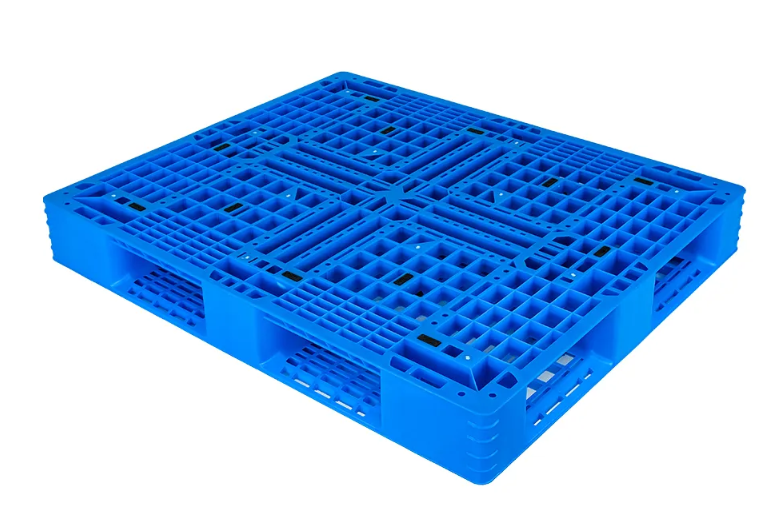
Leverage Vertical Space with Stackable Plastic Pallets
Physics-Based Space Savings: How Stacking Reduces Warehouse Footprint by Up to 70%
When it comes to maximizing storage space, vertical stacking makes good sense from a physics standpoint. Instead of spreading out across floors, warehouses simply go up instead. Special stackable plastic pallets let companies build multiple levels on top of each other, which cuts down on how much floor space they need while still keeping everything stable. According to recent industry reports, when done right, vertical stacking can cut down warehouse space needs by somewhere between 60 to 70 percent compared to just having everything on one level (see Logistics Efficiency Report 2023 for details). What makes this possible? A few clever design elements really help things work better. First, those pallets have special feet that lock together so they don't slide around sideways. Second, their edges are shaped just right so they line up perfectly even when stacked five layers high. And finally, there's an engineered system that spreads the weight across all those levels so nothing collapses under pressure. Warehouse managers who follow these guidelines often find they can get three times as much storage capacity without needing to expand their facilities at all.
Stackable Plastic Pallets vs. Alternatives: Comparative Space Yield in Racking Systems
In rack-compatible environments, stackable plastic pallets deliver superior space yield versus wood and metal alternatives:
| Pallet Type | Positions/Bay | Max Stack Height | Recoupable Space |
|---|---|---|---|
| Wood | 18 | 3 tiers | 12% gap reduction |
| Metal | 20 | 4 tiers | 18% lighter weight |
| Plastic | 24 | 6 tiers | 22% nesting efficiency |
Plastic pallets made with precision molding can fit about 22 percent more items in each rack bay because they maintain uniform size and have those smooth surfaces free from nails that create wasted space when using wooden pallets. The lighter weight of these plastic options makes them ideal for automated storage systems where heavier loads might strain the structure. Warehouse managers report significant gains in capacity too. For facilities with tall storage racks, companies are seeing roughly 30% greater storage potential per square meter over time, which adds up to real savings in operational costs.
Ensure Safety and Stability Through Proper Stacking Protocols
Compliant Height Limits: Why 5-Tier Stacking Is the Standard for Most Facilities
Most warehouses stick to a five tier limit when stacking pallets, usually around 15 to 20 feet high, following OSHA recommendations for stability. Going above this height raises the chance of stacks falling over by roughly 40 percent because the center of gravity gets too high and operators can't see as well from their forklifts. Warehouse environments are never static either; vibrations from machinery and constant movement around the facility make taller stacks even more unstable. Another important factor is what happens to plastic pallets when they reach this point. The weight adds up so much that many start showing signs of deformation after just five layers. Sticking to this limit isn't just about keeping workers safe it also helps extend the life of those expensive plastic pallets significantly.
Precision Alignment: Nesting Tolerances, Chamfer Design, and Visual Inspection Best Practices
Stability hinges on millimeter-level alignment, enabled by engineered chamfered edges and tight ±2mm nesting tolerances. Before stacking, operators should perform a quick visual inspection for:
- Interlock seam gaps wider than 3mm (a sign of wear or damage),
- Debris in nesting channels that impedes load transfer,
- Asymmetric weight distribution that could induce column drift.
Column stacking—not block stacking—delivers 30% greater seismic resilience in industrial transport simulations. Facilities that implement daily alignment verification protocols reduce load-shift incidents by 57% annually, according to OSHA’s warehousing hazard mitigation guidance.
Maintain Load Integrity Across Handling Environments
Ensuring load stability is critical for stackable plastic pallets across diverse logistics environments—from automated systems to manual handling—to minimize product damage and operational disruptions.
Dynamic Load Performance: Shock Absorption and Real-World Resilience at 1.5x Rated Capacity
Today's stackable plastic pallets come with shock absorbing polymers built right in. These materials soak up energy when there are impacts, vibrations happen, or things stop suddenly which means they cut down on dynamic load stress by around 35% compared to traditional wood or metal options. Real world tests have shown these pallets hold up great even when faced with loads that go past their rated capacity by as much as 150%. That kind of strength is really important during those rough moments like when forklifts move them around or they roll over bumpy floors. According to a study published in Logistics Safety Review back in 2023, this extra engineering actually reduces product damage rates by about a quarter in warehouses. Plus, those reinforced corners make these pallets last longer through all sorts of tough handling situations day after day.
Center-of-Gravity Management: Preventing Toppling in AGV and Conveyor-Based Logistics
In AGV and conveyor environments—where abrupt acceleration, braking, or turns intensify instability risks—center-of-gravity management is non-negotiable. Proven best practices include:
- Distributing weight evenly, with heavier items centered and secured to prevent mid-transit shifts,
- Limiting stack heights to keep the center of gravity low—reducing tip-over incidents by 40% in automated facilities,
- Selecting pallets with chamfered edges and alignment guides to ensure precise, repeatable nesting during high-speed transfers.
A 2022 distribution center case study demonstrated that consistent application of these protocols slashed accident rates by over half—validating their role in safe, scalable material flow.
FAQ
What are stackable plastic pallets?
Stackable plastic pallets are specialized pallets designed to interlock and be stacked vertically in storage environments, maximizing space efficiency and stability.
Why are plastic pallets preferred over wood or metal?
Plastic pallets are lighter, offer precision in molding, and have smooth surfaces that prevent wasted space, making them ideal for automated systems.
How high can pallets be stacked safely?
Most warehouses follow a five-tier limit, usually around 15 to 20 feet, to ensure stability and longevity of the pallets.
How do plastic pallets manage load integrity?
They incorporate shock-absorbing polymers and reinforced corners to reduce dynamic load stress and prevent damage in handling processes.

