
 EN
EN



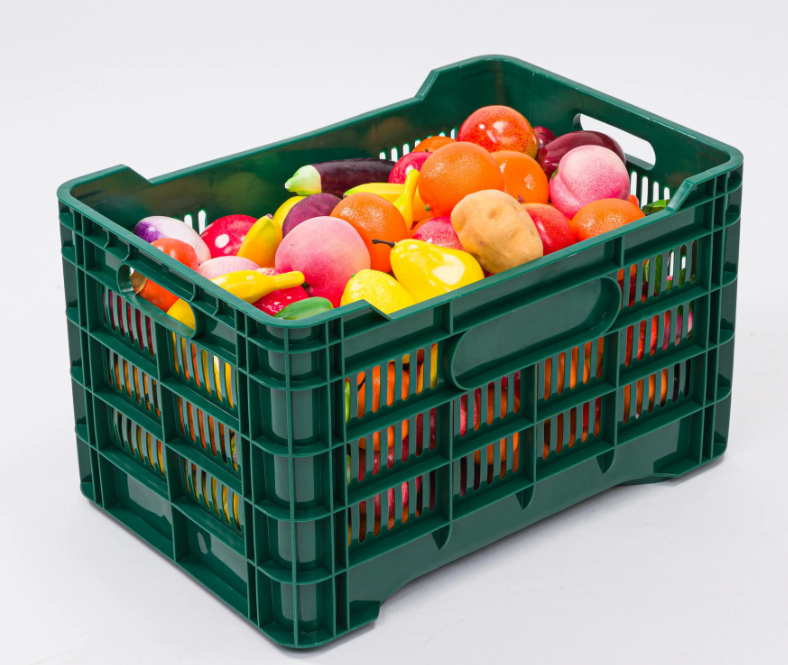
Material Safety and Food-Grade Compliance
FDA and EU Regulation (EC No. 10/2011) Requirements for Food-Contact Plastic Baskets
When transporting fruits and vegetables, plastic baskets need to meet strict food contact safety rules. Over in the United States, the FDA regulations under 21 CFR Parts 174 through 179 basically say these materials can't let chemicals migrate into the food products they carry. The rules are particularly tough on carcinogens, setting maximum levels at just 0.5 parts per billion. Things get even tighter across Europe where Regulation EC No. 10/2011 establishes overall migration limits around 10 milligrams per square decimeter. Specific harmful substances such as bisphenols and various heavy metals are capped at only 0.01 milligrams per kilogram there too. These regulatory frameworks set clear expectations for manufacturers working in this space.
- Third-party certification of material formulations
- Annual leach testing under conditions simulating acidic or fatty food exposure
- Documentation verifying non-toxicity across repeated washing and sanitizing cycles
Non-compliance carries serious consequences, including FDA fines up to $450,000 per violation and mandatory product seizure.
Key Material Indicators: UV-Stabilized PP, Recycled Content Limits, and Leach Testing Protocols
When it comes to materials for outdoor transportation needs, UV stabilized polypropylene stands out as the go to choice because it fights off sun damage so much better than regular PP. Standard tests show these stabilized versions can hold their shape and strength about three times longer when exposed to sunlight compared to normal polypropylene. For applications where food contact is involved, there's another important consideration too. The European Food Safety Authority released guidelines back in 2022 stating that recycled material shouldn't make up more than 30% of the final product if we want to maintain both quality and safety standards. Before approving any batch for production, manufacturers need to check several key factors including but not limited to resin composition analysis, color stability testing, and impact resistance measurements under various temperature conditions.
- Chromatography-based leach testing, sensitive enough to detect phthalates at <0.1 ppm
- Accelerated aging trials (500+ hours at 40°C), modeling five years of real-world use
- Impact resistance validation, confirming performance when stacked eight units high
Manufacturers must supply a Declaration of Conformity (DoC) before commercial deployment, affirming full alignment with these requirements.
Durability and Load Capacity by Produce Type
Impact Resistance and Structural Integrity for Soft Fruits and Leafy Greens
When it comes to soft fruits like berries and those tender leafy greens, they really need baskets that can handle shocks and resist getting squished. The baskets with ribbed sides and stronger corners at the edges help keep their shape when people move them around or stack them on top of each other. This actually cuts down on bruising quite a bit compared to regular baskets, maybe even as much as thirty percent. And then there's the whole ventilation thing too. Those little holes in the basket need to be just right sized. We're talking about something between eight and twelve millimeters usually works best for stuff like raspberries which are so easily damaged. These sized openings let enough air through without letting the fruit get crushed, but still manage to control how much moisture builds up inside.
Load Capacity Benchmarks: 15–25 kg for Tomatoes vs. 8–12 kg for Berries
The load capacity needs to match how dense and fragile the produce actually is. For tougher stuff like tomatoes that can handle some weight, we typically see baskets rated between 15 to 25 kilograms before they start to deform. Berries on the other hand are completely different. These delicate little guys need lighter duty baskets around 8 to 12 kg with shallower containers no deeper than 20 centimeters to prevent squishing. The rule of thumb? Heavier density fruits generally take about 40 to 60 percent more weight than those softies like strawberries or peaches. And don't forget about certifications either. Quality baskets come with proper static load testing paperwork showing they can handle twice what they're rated for. This kind of documentation gives peace of mind knowing these containers will last through multiple seasons of handling without breaking down prematurely.
| Produce Type | Optimal Load Range | Critical Design Feature |
|---|---|---|
| Tomatoes | 15–25 kg | Reinforced base & corner supports |
| Berries | 8–12 kg | Shallow depth (≤20cm) |
Ventilation, Drainage, and Moisture Control
Aperture Design Trade-Offs: Maximizing Airflow While Minimizing Bruising in Berries and Greens
Getting good air circulation right depends on smart hole design, not just how big they are but also their shape and how the edges are treated. Berries and leafy vegetables need around 30 to 40 percent airflow through packaging to stop mold from growing, but those holes can't be so large they crush the product either. Studies have found that when holes go over 12 millimeters, bruising increases by nearly 20 percent. Hexagon shaped openings work really well because they balance strength with proper ventilation, allowing water to drain at rates between 0.8 and 1.2 liters per minute. This drainage is super important since pooled water accounts for about a quarter of all spoilage during transport. Different crops require different approaches too. Strawberries do best with holes no bigger than 8 mm and extra strong edges around them, whereas tougher greens like kale can handle larger grid patterns measuring up to 15 mm. Rounded edges on these openings cut down on spots where damage might occur by about a third, making a big difference for delicate fruits and veggies that get easily marked up.
Ergonomics, Stackability, and Logistics Efficiency
Handle Geometry and Weight Distribution for High-Frequency Handling in Markets and Trailers
Ergonomic handle design directly influences worker safety, fatigue, and throughput—especially in high-lift environments like wholesale markets or refrigerated trailers. Top-performing handles feature:
- Contoured grips that reduce hand pressure by 30% during transport (per Occupational Safety Journal, 2023)
- Centered weight distribution to prevent load shifting in motion
- Angled cutouts accommodating insulated or gloved hands in cold-storage settings
These features are essential where handlers lift baskets 50+ times per hour—reducing musculoskeletal strain and improving operational consistency.
Nesting Ratios and Stacking Stability Across Common Plastic Basket Types
Nesting efficiency drives warehouse space utilization, with leading designs achieving 4:1 empty-nesting ratios. Stable stacking depends on three interdependent elements:
- Interlocking corner reinforcements that resist lateral movement and column collapse
- Tight base-to-rim dimensional tolerance (<2 mm) for secure alignment
- Ribbed sidewalls that evenly distribute vertical loads across the structure
Standard 40L baskets maintain safe 5-high stacking with 15 kg loads, while shallow berry containers rely on anti-slip rims and precision-molded bases to prevent slippage during transit.
Frequently Asked Questions
What are the FDA requirements for food-contact plastic baskets?
The FDA regulations require materials used in plastic baskets to prevent chemical migration into food products, with strict limits on carcinogens.
What materials are recommended for outdoor transportation needs?
UV-stabilized polypropylene is preferred for prolonged sun exposure, maintaining shape and strength better than regular polypropylene.
How are baskets designed to protect soft fruits and leafy greens?
Baskets with ribbed sides and strong corners reduce bruising, and proper ventilation holes prevent moisture buildup without crushing the produce.
What is the importance of handle design in logistics?
Ergonomic handle designs help reduce worker fatigue and prevent injuries, improving operational efficiency, especially in high-frequency lifting environments.

