
 EN
EN



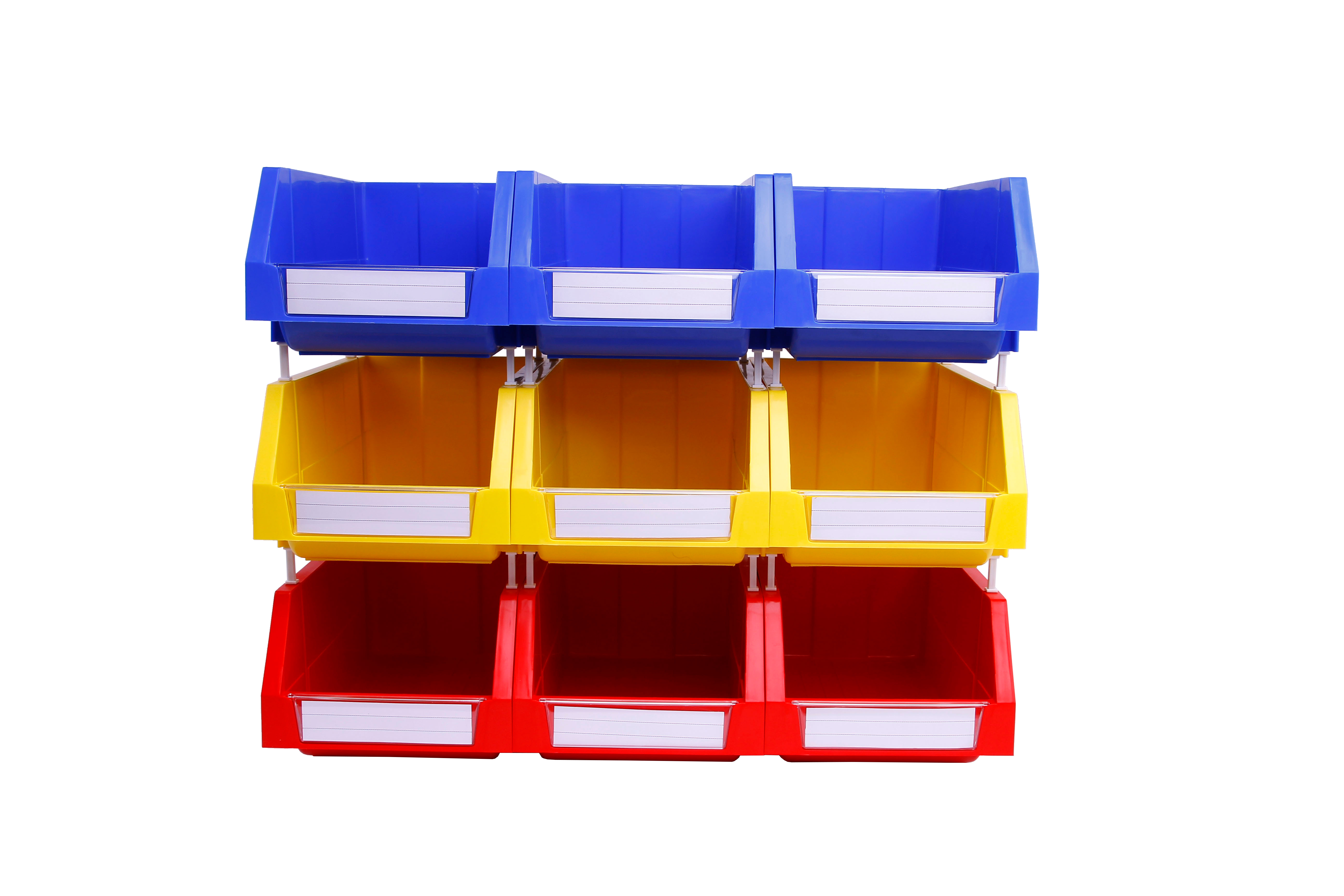
Understanding Plastic Shelf Bin Systems and Components
What Is a Plastic Shelf Bin and How Does It Work?
Plastic shelf bins are those versatile storage containers that help make the most of both vertical and horizontal space when organizing stuff. What makes them stand out? Well, they usually have slots in the bottom for air to circulate, walls that can take some beating without breaking down, and special connectors so multiple bins stack securely on top of each other. Most come made from either HDPE or polypropylene plastics which keeps them light enough to move around but still strong enough to hold about 50 pounds in the middle sized ones. Compared to wire baskets or fabric storage solutions, these plastic versions don't get wet or dusty as easily and people can actually see what's inside thanks to clear sides or labels stuck on them.
Common Types of Plastic Shelf Bins for Home and Office Organization
Four primary designs dominate the market:
- Stackable storage bins: Ideal for warehouses and pantries, these feature open-front designs or built-in rear hangers compatible with louvered panels.
- Divided compartment bins: Used in offices or workshops, they include adjustable dividers for custom layouts.
- Pull-out drawer bins: Designed for integration into cabinet systems, offering ergonomic access in kitchens or garages.
- Foldable collapsible bins: Provide space-saving solutions for seasonal items or compact environments.
According to the 2024 Modular Storage Report, stackable bins improve space utilization by 34% compared to traditional shelving.
Tools and Materials Needed for Installation
A basic installation kit includes:
- Shelf brackets or rails matched to your wall type (drywall anchors for plaster, toggle bolts for masonry)
- Level, measuring tape, and stud finder for accurate alignment
- Adjustable wrench and screwdriver set
- Plastic shelf bins with mounting clips
- Optional: anti-tip straps for freestanding units
Ensure all components meet industry load-rating standards, especially when storing heavy tools or bulk pantry items.
Planning Your Plastic Shelf Bin Layout for Maximum Efficiency
Measuring Your Space for Optimal Bin Placement
Begin by recording room dimensions using a laser measure ($40-$120 models recommended). A 2023 National Association of Home Builders study found that 34% of organizational failures stem from inaccurate spatial planning. For plastic shelf bins, consider:
- Horizontal space: Shelf width minus 2" for airflow
-
Vertical clearance: Minimum 18" between stacked bins for safe access
Critical path zones (e.g., pantry doors, office chair rotation areas) require bins no deeper than 80% of available space-a 24"-deep cabinet needs 22" bins. Use proper measurement techniques to avoid sizing errors.
Choosing the Right Shelving System Compatibility
Match plastic shelf bins to your existing infrastructure using three criteria:
| Factor | Standard Requirement | Exception Cases |
|---|---|---|
| Weight capacity | 50 lb/shelf minimum | Industrial bins: 75 lb |
| Bin-channel fit | 0.5-1 mm clearance | Anti-vibration systems |
| Material harmony | Polypro-on-steel | Wood shelving needs pads |
Interlocking rail systems reduce lateral shift by 60% compared to freestanding units, based on 2024 warehouse optimization data. For mixed environments, refer to compatibility guidelines during selection.
Designing a Functional and Scalable Storage Layout
Adopt a forward-planning approach:
- Place high-traffic items within arm™s reach
- Reserve upper and lower tiers for seasonal or backstock items
- Allocate 15% empty space for future expansion
Case Example:
A 48"W x 72"H wire shelf was reorganized using:
- 6 -8" bins (front row, office supplies)
- 4 -12" bins (rear, archived documents)
- Top 18": LED lighting strip + 2 reserve bins
This configuration reduced daily search time by 40% in a 2023 University of Michigan workplace efficiency trial. Use color-coded tags (blue=utilities, red=urgent) for intuitive navigation.
Installing the Support Structure and Mounting the Bins
Assembling Brackets, Rails, and Frame Components
Start by spreading everything out on a clear surface where there's plenty of room to move around. Most plastic shelf systems come with those interlocking brackets and rails that need careful alignment. People often struggle with getting these pieces lined up properly, so take your time with this step. When working with larger modular racks (anything over four feet wide), it actually makes things easier if we put together the frame sections horizontally first. According to some industry research from last year, this method cuts down on installation mistakes by almost 40%. And remember, when connecting parts, reach for a rubber mallet instead of metal tools. Plastic joints can be surprisingly delicate, and nobody wants to crack something just because they used too much force.
Securing the Structure to Wall or Standalone Units
Anchor wall-mounted systems into studs using 3" lag screws; use toggle bolts for hollow walls. Rebstorage's rack installation guide recommends testing mounting points at 150% of expected load-a step often skipped in DIY setups. For freestanding units, distribute weight evenly across legs and install anti-tip brackets in earthquake-prone areas.
Ensuring Level Alignment and Structural Stability
Check every connection with a 24" precision level. Shim legs with composite spacers-not wood-to prevent warping in humid conditions. Industry standards allow less than 1/8" deviation per linear foot; exceeding this increases the risk of bin detachment under load. Add mid-span cross-braces for shelves wider than 48" to prevent sagging.
Clicking in the Plastic Shelf Bins and Testing Weight Distribution
Fully engage bin lips with shelf channels until an audible click confirms secure placement. Conduct stress tests by loading bins to 90% capacity for 48 hours while monitoring for:
- Deflection over 1/4"
- Joint separation at bracket junctions
- Creaking indicating poor friction fit
Make adjustments using proper rail alignment techniques before finalizing the setup.
Optimizing and Organizing Your Installed Plastic Shelf Bin System
Labeling and Categorizing Contents for Easy Access
Label each bin clearly with a waterproof label maker or adhesive tags. Group contents by frequency (daily vs. seasonal) or category (baking supplies, stationery). A 2023 Pantry Optimization Survey found users with color-coded labels reduced retrieval time by 37% compared to unlabeled systems.
Using Dividers and Accessories to Enhance Functionality
Maximize utility with stackable tray inserts and adjustable dividers. For small parts like screws or spices, create compartments as narrow as 1.5". Attach sliding drawer accessories to deep bins for full visibility of back-row items without disassembling the shelf.
Case Study: Transforming a Pantry with Modular Plastic Shelf Bins
A homeowner replaced wire shelving with 18 interlocking plastic shelf bins, organizing 124 pantry items. By grouping baking ingredients in front-facing labeled bins and using tiered risers for spices, meal prep time dropped by 30%, and 6.2 sq ft of vertical space was reclaimed.
Adjusting Spacing and Troubleshooting Common Fit Issues
If bins are too tight, check for over-tightened shelf clips-most systems allow 0.5"-1" of horizontal adjustment. For warped bins, gently warm the plastic with a hairdryer (max 120°F) for 15 seconds to reshape. Always test-load bins at 80% capacity during installation to catch alignment issues early.
Maintaining and Expanding Your Plastic Shelf Bin Storage Over Time
Cleaning and Inspecting Bins for Long-Term Durability
Routine maintenance extends bin lifespan by 40% (Storage Solutions Journal, 2023). Clean interiors monthly with mild detergent and avoid abrasive cleaners that degrade plastic. Inspect for cracks near mounting points and warping in high-humidity areas. Rotate bins annually to distribute wear evenly.
Replacing Worn Parts and Upgrading Components
The majority of system failures actually come down to worn out rails or cracked brackets rather than issues with the bins themselves. Anyone who has seen what happens when those L-shaped brackets bend needs to replace them right away before there's any real danger of collapse. For folks dealing with heavier loads, upgrading those steel support rods to at least 14 gauge makes all the difference in terms of durability. Some retrofit solutions available on the market today, such as products offered by companies like InterMetro, include helpful additions like anti slip pads and stronger joint reinforcements. These upgrades can boost each bin's load capacity by around 22 pounds or roughly 10 kilograms, which might seem small but adds up fast when multiple bins are involved.
Scaling Up: Adding Modules for Growing Storage Needs
Modular storage solutions can expand horizontally by connecting panels at the sides or stack vertically when using those special stabilizing posts. When planning any expansion, it's smart to take another look at how things are arranged. Try applying the ABC analysis approach where frequently used items stay within easy reach while stuff we only need during certain seasons goes up higher. Leaving about three inches of space between different groups of items helps with air circulation and makes finding what we need much faster. According to recent studies from last year, properly spaced out storage arrangements actually cut down retrieval time by around 27%. Makes sense really, nobody wants to waste time digging through clutter when they could be getting work done instead.
FAQ
What are plastic shelf bins typically made from?
Plastic shelf bins are usually made from HDPE (High-Density Polyethylene) or polypropylene plastics. These materials ensure the bins are lightweight yet durable enough to support a substantial amount of weight.
How can I maximize space when installing plastic shelf bins?
To optimize space, it's important to measure accurately and plan the arrangement effectively. Consider factors such as horizontal space, vertical clearance, and the positioning of high-traffic items. Additionally, using stackable or foldable bins can further enhance space utilization.
Are there tools required for installing plastic shelf bins?
Yes, a basic installation kit typically includes shelf brackets or rails, a level, measuring tools, and a stud finder. For more complex setups, an adjustable wrench, screwdriver set, and optional anti-tip straps might be necessary.
What should I do if my bins are misaligned?
Ensure your shelf clips aren't over-tightened, as most systems offer some horizontal adjustment. If bins are warped, gently warming the plastic can help reshape it without damage.
Can plastic shelf bins be customized?
Absolutely! Plastic shelf bins can be customized with dividers, accessories like sliding drawers, and labeling systems to suit specific storage needs and improve organization.
Table of Contents
- Understanding Plastic Shelf Bin Systems and Components
- Planning Your Plastic Shelf Bin Layout for Maximum Efficiency
- Installing the Support Structure and Mounting the Bins
- Optimizing and Organizing Your Installed Plastic Shelf Bin System
- Maintaining and Expanding Your Plastic Shelf Bin Storage Over Time
- FAQ

