
 EN
EN



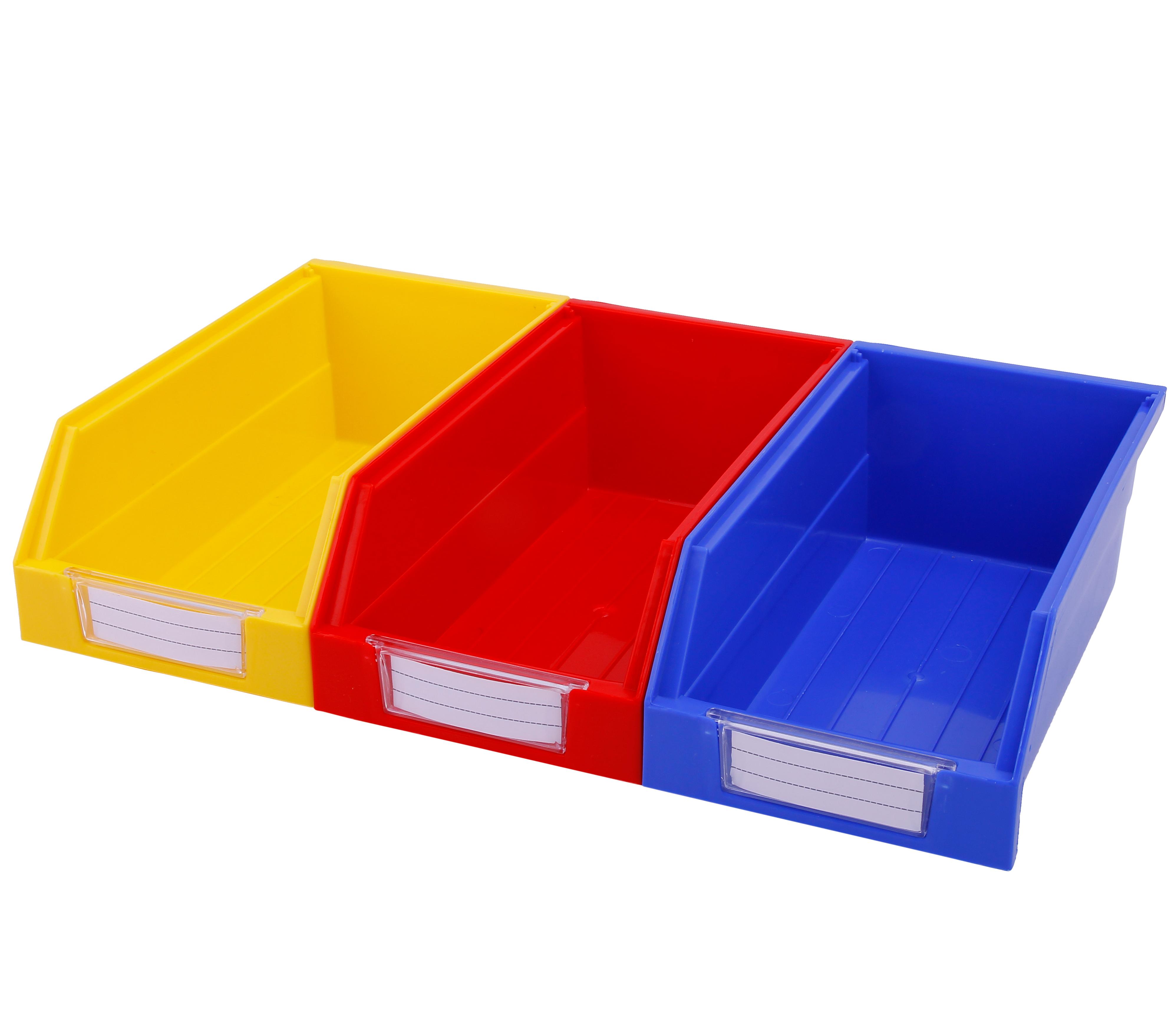
What Defines 'Large-Capacity' for Warehouse Storage Bins?
Standardized Capacity Ranges: From 50–200+ Gallons and 1,500–4,000 lb Load Ratings
Warehouse storage bins designed for large capacities come with standard volume and weight limits that most facilities follow. For industrial settings, we usually see volumes starting around 50 gallons and going all the way up past 200 gallons when dealing with bulk materials. Load ratings generally fall between 1,500 and 4,000 pounds, which makes them suitable for heavy stuff like metal parts or car components. The reason these numbers matter is simple safety. If bins get overloaded, they can deform over time and create real problems in the workplace. That's why industry guidelines stick to these ranges so everything works smoothly with existing rack systems and other equipment. Logistics managers appreciate this because it lets them pick the right bin size based on what they actually need to store, instead of guessing or improvising later.
Beyond Volume: How Dimensions, Stackability, and Forklift Compatibility Shape Real-World Capacity
True functional capacity extends beyond gallon measurements. Three interdependent factors determine real-world usability:
- Dimensions must align with racking systems and aisle widths to prevent wasted space
- Stackability, measured by nesting ratios when empty and interlock security when full, enables vertical density—high-ratio designs can triple storage per square foot
- Forklift compatibility, via integrated pockets or pallet bases, ensures fluid movement between zones Without alignment across all three, even high-volume bins become static obstacles. Optimizing this triad maximizes throughput while reducing labor-intensive repositioning.
Material & Construction: Engineering Durability for Heavy-Duty Warehouse Storage Bins
Corrugated Plastic, Reinforced Polyethylene, and Powder-Coated Steel — Use-Case Matched Performance
When choosing materials for warehouse storage bins, there's really no getting around the need to find a balance between weight considerations, how long they'll last, and what kind of environment they'll face day after day. Corrugated plastic bins weigh about 20 to 40 percent less than other types on the market, which makes them great for keeping things dry inside warehouses where moisture is a concern. The reinforced polyethylene versions can handle pretty rough treatment thanks to special UV stabilizers in their formulation. These bins stay tough even when temperatures swing wildly between freezing cold at minus 40 degrees Fahrenheit all the way up to scorching heat of 180 degrees. If someone needs something absolutely bulletproof though, nothing beats those powder coated steel bins. They have roughly four times the strength compared to regular plastic ones, plus their surfaces resist rust and hold up well against harsh chemicals commonly found in industrial settings.
| Material | Best Use Case | Key Advantage | Temperature Tolerance |
|---|---|---|---|
| Corrugated Plastic | Lightweight indoor storage | Moisture resistance, 40% weight savings | 32°F to 120°F |
| Reinforced Polyethylene | Outdoor/harsh environments | UV stability, impact absorption | -40°F to 180°F |
| Powder-Coated Steel | High-security/heavy loads | Corrosion resistance, 4,000 lb+ capacity | -20°F to 200°F |
Critical Design Features: Structural Rigidity, Nesting/Stacking Ratios, and Chemical/Impact Resistance
Good engineering goes way beyond picking materials. Ribbed wall designs really boost structural strength so they won't bend or twist even when subjected to loads that are 150% higher than normal. When it comes to storage efficiency, we've figured out the best stacking ratios too. Empty spaces should be no more than four times the loaded ones, which means warehouses can fit much more vertically without taking up extra floor space. The numbers tell us this approach cuts down on warehouse space needed by around 30%. These products also stand up against all sorts of harsh chemicals found in different industries. They resist damage from things like oil based lubricants and various acids. We test them thoroughly too, dropping them from six feet high to make sure they can handle real world impacts. All these improvements mean facilities that see heavy usage replace their equipment half as often as those using regular models. That's a big deal for maintenance budgets and operational continuity.
Strategic Sizing and Workflow Integration for Warehouse Storage Bins
Getting the right size for warehouse storage bins means looking at what's actually stored there. Think about things like how big the products are, how heavy they get, and how often they move through the system. When dealing with items that sell fast, putting medium sized bins where workers can reach them easily cuts down on search time somewhere around 15 to 22 percent. Slower moving goods work better stacked tightly against walls or in corners. The size of these bins also needs to fit with everything else in the warehouse. Standard sizes that match up with pallet jacks or forklifts keep aisles clear and make operations run smoother, maybe even boosting efficiency by close to 30%. Organizing storage areas by grouping similar items together makes sense too. Workers spend less time wandering around when picking orders. Near packing areas, smaller bins help speed things up during order fulfillment while bigger ones back in storage take full advantage of vertical space. Don't forget to check if the weight limits on bins match what's actually being stored inside. Going for modular designs makes life easier later on when inventory changes over time.
Frequently Asked Questions
What defines a large-capacity warehouse storage bin?
Large-capacity bins typically range from 50 to over 200 gallons in volume and accommodate load ratings between 1,500 and 4,000 pounds.
What factors influence the real-world capacity of a warehouse bin?
Besides volume, dimensions, stackability, and forklift compatibility determine the usability of warehouse bins.
Why is material choice important for warehouse storage bins?
The material affects the bin's weight, durability, and environmental resilience, impacting storage efficiency and life span.

